

Bryson Bichwa
AUBA Southern Africa
Pretoria – As the international system undergoes significant geopolitical and economic realignment, Africa has emerged as a central arena in global competition among major powers.
The continent’s growing strategic relevance-driven by its demographic weight, resource endowments, and geopolitical positioning-demands a recalibration of how Africa engages with the world.
Remarks by the President of South Africa, Cyril Ramaphosa, he delivered on the margins of the African Union (AU) Heads of State Summit, underscore a broader continental push toward economic sovereignty and strategic autonomy.
Ramaphosa urges that African states should respond collectively to shifting global power dynamics and to resist emerging forms of economic domination masquerading as partnership.
His warning reflects growing concern that Africa risks being repositioned once again as a supplier of raw materials ”rocks, soil, and dust” without commensurate value retention or developmental returns.
Africa strategic location
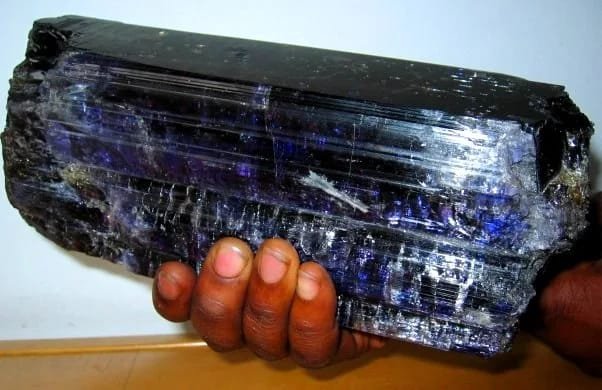
Africa holds a substantial share of the world’s critical minerals essential to 21st-century industrial transformation, including cobalt, lithium, copper, uranium, gold, diamonds, tanzanite, and rare earth elements.
These resources are key to global supply chains in renewable energy, advanced manufacturing, digital technologies, and electric mobility. As the global economy accelerates its transition toward decarbonization and digitalization, Africa’s resource base has become strategically indispensable.
Yet the persistent export of unprocessed raw materials has constrained industrialization and reinforced structural dependency.
The absence of domestic value-addition, limited technology transfer, and asymmetrical trade arrangements continue to deprive African economies of the full developmental benefits of their natural wealth.
Addressing these systemic challenges is central to Africa’s pursuit of inclusive growth and long-term resilience.
What western powers want
President Ramaphosa at the 39th AU Summit
The intervention by South African President Cyril Ramaphosa follows remarks made by U.S. Secretary of State Marco Rubio at the Munich Security Conference, where calls for renewed Western leadership were widely interpreted as signalling a revival of hierarchical global engagement.
Policy analysts say such narratives raise concerns about a return to neo-colonial patterns that prioritize access to resources over equitable and mutually beneficial partnerships.
In this context, Africa’s engagement in multilateral forums-particularly the G20, where the continent now has enhanced representation – must be guided by a coherent and unified negotiating position. Africa’s strategic minerals, markets, and demographic trajectory provide substantial leverage, but only if mobilized collectively.
Africa’s unity test
With a population exceeding 1.4 billion, a rapidly expanding consumer market, and the world’s youngest workforce, Africa represents one of the most significant growth frontiers of the global economy.
The full implementation of the African Continental Free Trade Area (AfCFTA) offers a viable framework for transforming this potential into tangible economic power by deepening intra-African trade, strengthening regional value chains, and enhancing industrial competitiveness.
Policy coherence, institutional capacity, and cross-border coordination will be decisive in determining whether Africa can move from resource dependence to value-driven growth. Strategic investments in education, industrial policy, infrastructure, and technological capabilities are essential for this transition.
Way forward
Ramaphosa’s message signals a broader continental consensus: the era of extractive engagement without fair value sharing is no longer sustainable.
Africa possesses the resources, human capital, and market scale necessary to shape-not merely adapt to-the evolving global order.
What remains critical is the political will to act collectively and the strategic discipline to translate policy ambition into execution.
For western powers like the US, EU countries and China, this moment calls for a redefinition of engagement with Africa, one grounded in mutual benefit, value addition, and respect for African agency.
For Africa, unity and strategic clarity will determine whether the continent becomes a rule-shaper in the global economy or remains subject to external priorities.
Leave a Reply